

“And they lived happily ever after.” It’s the classic ending to almost every fairy tale, but anyone who has been married for a while knows the story doesn’t stop at the wedding. There are the ordinary days, the hard years, the children, the move, the business that took off or didn’t, and all the effort it takes to keep choosing each other. A renewal of vows is a way to stop and celebrate all of that.
A renewal of vows is a ceremony where a married couple reaffirms their love and commitment to each other. It isn’t a legal event, so there’s no license or paperwork, and there are no fixed rules about when to hold it, who officiates or how big it should be. That freedom is what makes it fun to plan, and it’s also why many couples don’t know where to start. This guide covers what a renewal of vows is, when couples usually do it, how to plan it step by step, how the ceremony runs, and what it costs.
What is a Renewal of Vows?
A renewal of vows, also called a vow renewal, is a ceremony in which a couple who are already married repeat or rewrite their wedding vows in front of the people who matter to them. It celebrates the marriage you’ve built rather than starting a new one.
Because your marriage is already legally valid, a vow renewal doesn’t change your civil status and doesn’t need a marriage license. It can be religious or not. Some couples hold it in a chapel or church with a priest or pastor, while others ask a friend or one of their children to lead a simple ceremony in a garden.
Vow renewals are still less common in the Philippines than in some other countries, but more couples are choosing them, often with their children and grandchildren involved in the planning.
When Do Couples Renew Their Vows?
There’s no minimum number of years. You can renew your vows on your first anniversary or your fiftieth. That said, most couples choose a moment that already means something:
- A milestone anniversary, most often the 10th, the 25th (silver) or the 50th (golden)
- After a hard season, such as an illness, time spent apart or a difficult few years, as a way of marking that you came through it together
- To have the wedding you couldn’t have the first time, for couples who married quickly, in a civil ceremony, or on a tight budget
- To include the family you’ve built, so your children, and sometimes grandchildren, can be part of the day
- As a surprise from the family, when children plan a vow renewal for their parents’ or grandparents’ anniversary

How to Plan Your Renewal of Vows
1. Decide What Kind of Celebration You Want
Start with the feel of the day before any of the details. Is it an intimate lunch with your closest family, or a full celebration with friends you haven’t seen in years? Formal and themed, or relaxed and simple? Religious or not? Once you can picture the day, every later decision gets easier.
2. Make Your Guest List
Your guest list shapes almost everything else, including the venue, the menu and the budget, so settle it early. You can invite as few or as many people as you like. If older relatives are coming, think about how far they’ll travel and how easy the venue is to get around.
3. Choose a Venue
Some couples go back to the church or town where they married. Others want a change of scenery, and Tagaytay is a favorite for that: cool air, wide views and a slower pace, only a couple of hours from Metro Manila.
At Hillcreek Gardens, you can hold the ceremony in the estate’s own chapel and walk straight to the reception, whether that’s a sit-down meal at The Blue Room Dining, a cocktail reception on the garden lawn or a larger celebration in one of the event halls. You can also stay the night at the on-site hotel. See our renewal of vows venue in Tagaytay for the options.

4. Choose Your Officiant
Because a vow renewal has no legal requirements, your officiant can be anyone: a priest or pastor, a close friend, a sibling, or one of your children. Choose someone who knows your story and can speak about it.
If you’d like a religious ceremony, contact your parish or church early. Each has its own schedule and requirements, and some prefer to hold a renewal of vows or anniversary blessing during a Mass.
5. Book Vendors If You Need Them
A simple vow renewal may only need a venue and a meal. For a bigger celebration, you might want a photographer, a coordinator, a florist and a host or band. A photographer is worth it whatever the size, because these are photos your family will keep for a long time.
A venue package can save a lot of coordinating. Hillcreek Gardens’ customizable event packages typically include venue styling, catering, lights and sound, with the events team and accredited partners handling the rest.
6. Write Your Vows
You can repeat your original wedding vows, update them, or write new ones from scratch. Many couples start by reading their first vows again and then adding what they know now that they didn’t know then. Keep them short enough to say without rushing, around one to two minutes each, and practice them out loud at least once.
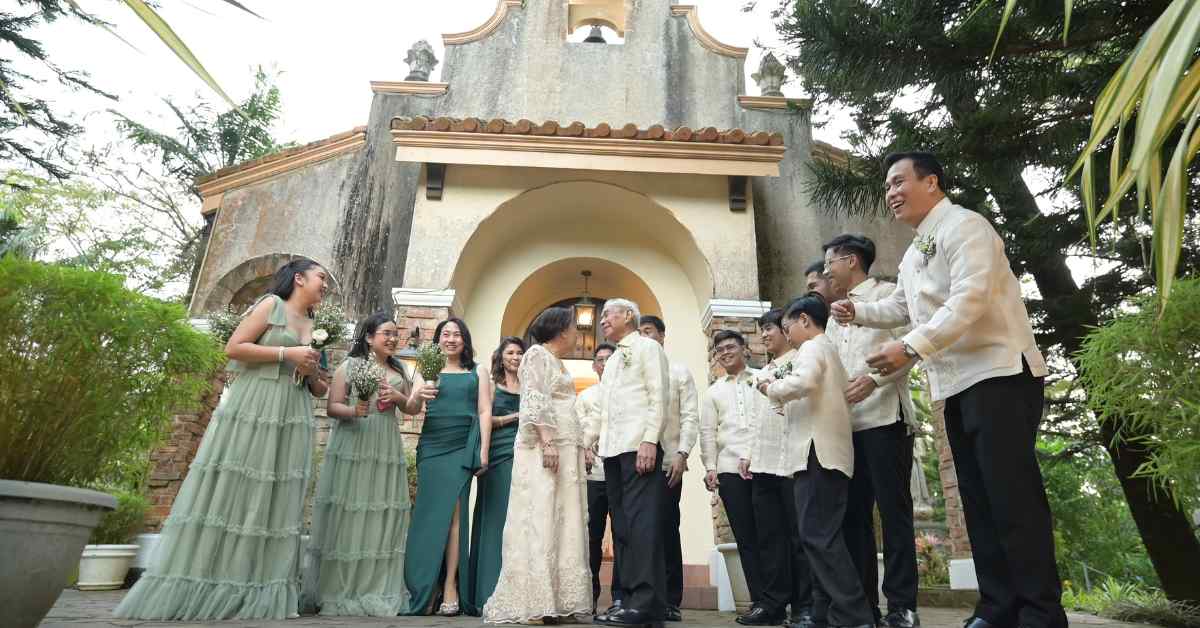
Renewal of Vows Ceremony Order
There’s no required order, but most vow renewals follow a simple version of a wedding ceremony:
- Processional. The couple walks in together, or one partner is walked in by their children.
- Welcome. The officiant welcomes guests and says a few words about why everyone is there.
- Reading or prayer. A short reading, verse or blessing, often given by a family member.
- Your story. The officiant, or one of your children, shares a few memories from your marriage.
- Vows. You each say your vows.
- Ring exchange. Exchange your original rings again, or new bands.
- Pronouncement and kiss. The officiant closes the ceremony.
- Recessional and toast. You walk out together and move to the reception.
How Much Does a Renewal of Vows Cost in the Philippines?
It depends almost entirely on how many people you invite and where you hold it. A small renewal at home with a family lunch costs little more than the meal. A full celebration at a venue costs closer to a small wedding.
The main costs to budget for are:
- Venue, including the ceremony space and the reception area
- Catering, usually priced per guest
- Styling and flowers
- Photography and video
- Attire, which can be your original wedding outfit or something new
- Rings, if you’re exchanging new bands
- Officiant, including any church or parish fee for a religious ceremony
Renew Your Vows at Hillcreek Gardens Tagaytay
Hillcreek Gardens brings together everything a vow renewal needs on one garden estate in Tagaytay:
- An on-site chapel with rustic interiors, for couples who want a chapel ceremony, including those who didn’t get to walk down a church aisle the first time
- Ceremony and reception in one place, with The Blue Room Dining for an intimate sit-down meal, the garden lawn for an outdoor reception, and event halls for larger celebrations
- Ramps throughout the estate, so parents and grandparents can move around comfortably
- Customizable packages covering styling, catering, lights and sound
- An on-site boutique hotel, so out-of-town family can stay overnight and the two of you can make a weekend of it, with the pool and spa on site
To check dates and packages, visit our renewal of vows venue page or contact the events team.
Frequently Asked Questions
Is a renewal of vows legal in the Philippines?
A renewal of vows isn’t a legal ceremony, and it doesn’t need to be. Your marriage is already legally valid, so there’s no marriage license, no registration and no change to your civil status.
How many years should you be married before renewing your vows?
There’s no minimum. Many couples choose a milestone like their 10th, 25th or 50th anniversary, but you can renew your vows whenever the timing feels right.
Who can officiate a renewal of vows?
Anyone you choose. A priest or pastor is the usual choice for a religious ceremony, but a family member, close friend or one of your children can lead it.
We only had a civil wedding. Can we have a church ceremony as a vow renewal?
You can hold a vow renewal in a chapel. If you’d like your marriage recognized by your church, though, that’s a church wedding rather than a renewal of vows, and your parish will explain its requirements.
What do you say at a renewal of vows?
You can repeat your original vows, update them or write new ones. Most couples talk about what the marriage has been through, what they’ve learned about each other and what they’re promising for the years ahead.
What should we wear to a renewal of vows?
Whatever suits the celebration. Some couples wear their original wedding attire, some choose a new gown or barong, and some keep it simple with smart casual for a garden lunch.